
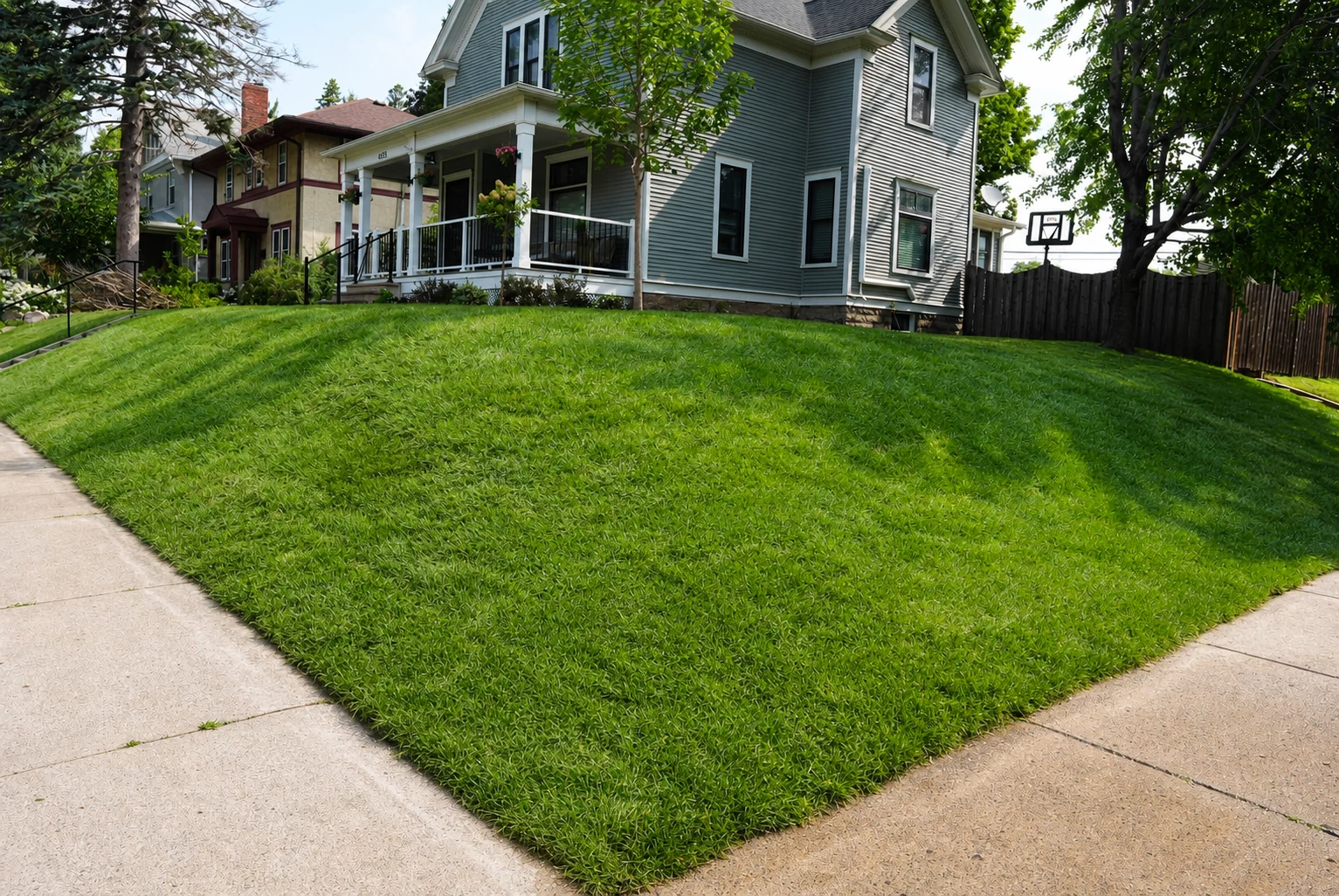
Correct the grade first
Sod should not hide low spots or a foundation drainage problem. Before soil preparation, establish how surface water will move, protect required elevations at walks and patios, and create smooth transitions that can be mowed safely.
Prepare soil for roots, not appearance
Compacted subsoil limits rooting and holds water unevenly. Preparation may include removing debris, loosening the surface, adding appropriate soil, correcting settlement, and creating a firm but root-friendly finish grade.
Installation details matter
Tight joints, staggered seams, clean edges, full soil contact, immediate watering, and careful work on slopes reduce drying and movement. Sod left stacked in heat can decline before it ever reaches the ground.
The first weeks determine establishment
New sod needs consistent moisture without remaining saturated. Watering changes with weather, shade, soil, and irrigation coverage. Foot traffic and mowing should wait until roots begin anchoring into the prepared soil.
Not every space should be lawn
Deep shade, concentrated dog traffic, steep slopes, narrow side yards, salt exposure, or chronic wetness may call for planting, paths, drainage work, or artificial turf instead. A smaller healthy lawn is often better than forcing grass into every corner.